News

Recent Gifts on display at Provincetown Art Association and Museum
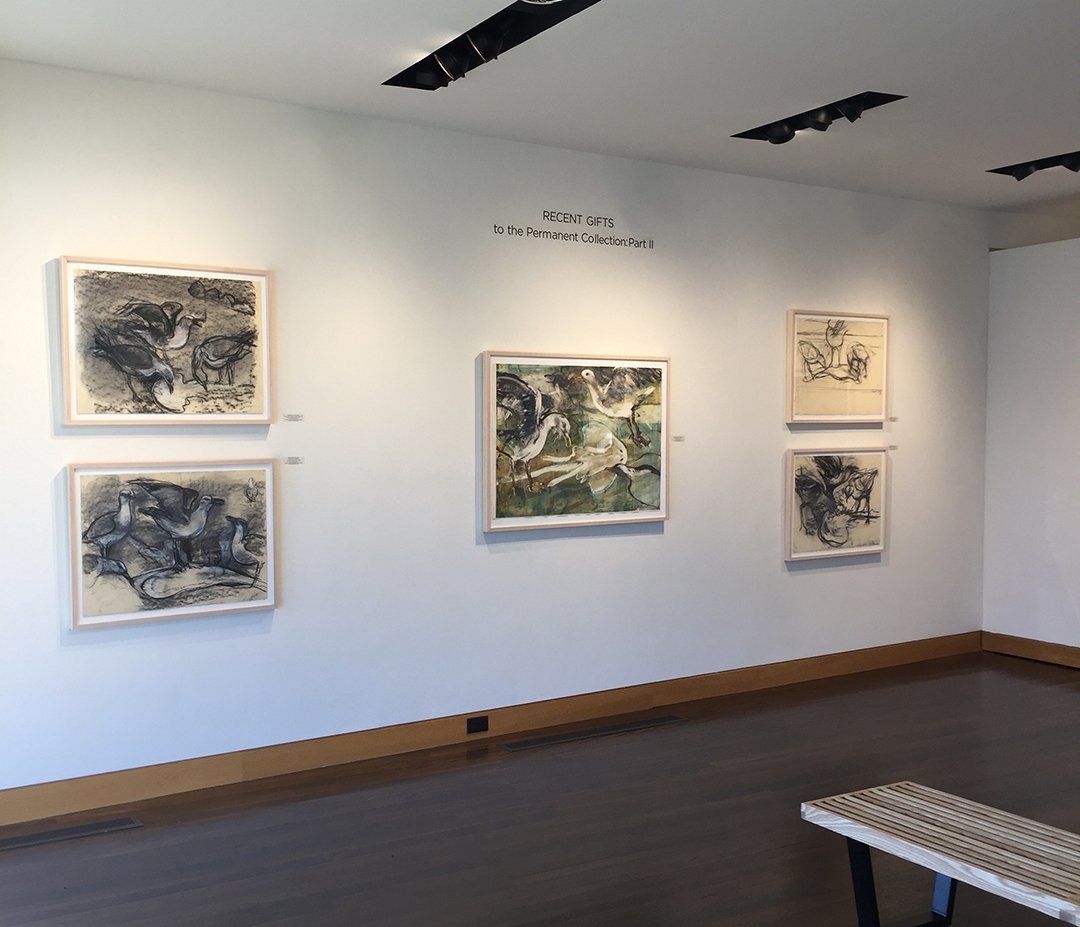
Twelve works on paper by Michael Mazur were recently presented by Gail Mazur to the Provincetown Art Association & Museum. Consisting of monotypes and charcoal drawings made in 1989, this cycle of images depict seagulls fighting over and devouring a dead skate, a scene Mazur witnessed on the beach at Provincetown.
The pictures, most of which had never before been exhibited, were on display as part of the PAAM’s "Recent Gifts" show.
From the Archive: “Series of Thought”
The Common | A Modern Sense of Place
Written by Betsey Garand
November 3, 2017 Issue 14


Documentaries on Mazur's Monotype Process Now Available Online

The documentaries, Making Monotypes: the Art of Michael Mazur (15 min) and Wakeby Day, Wakeby Night: a Monotype Mural By Michael Mazur (29 min), are now available for online viewing.
Each video explores the creative practice and theories of this important American artist. In Making Monotypes, Mazur demonstates the techniques involved in monotype, the printmaking medium he revolutionized between the 1980s and 2000s. As Mazur creates a pair of monotype images of an amiryllis the camera captures each step of the process, accompanied by an insightful and informative narration by the artist.The subject of "Wakeby Day, Wakeby Night," is one of the most ambitious monotype projects in printmaking history, Mazur's monumental installation commissioned by the Massachusetts Institute of Technology. Again, the viewer is given an intimate and detailed look at the materials and methods of this distinctive process, from initial sketches through final printing. Interviews and narration by the artist explain and illuminate the process.Taken together, these two short films provide an understanding of the art of monotype as well as the artistic philosophy of this brilliand and innovative prinmaker and painter.

On view: Mazur and Monet at Currier Museum
Michael Mazur's painting "Pond Edge" (1996) was on view at the Currier Museum of Art in Manchester, NH, in conjunction with the exhibit "Monet: Pathways to Impressionism” July 1, 2017–November 13, 2017
Mazur's picture, which is in the museum's permanent collection, was included in a room of work relating to Monet:
"In the same vein as Monet, and the French Impressionists, Mazur sought to paint his impression of nature, rather than a realistic depiction of the scene. Pond Edge alludes to forms in nature while remaining dreamily abstract."

Michael Mazur “Pond Edge,” 1996, oil on canvas, 52 in. x 74 in. (132.08 cm x 187.96 cm) Collection of the Currier Museum of Art, Manchester, NH. Henry Melville Fuller Fund, 2003.14

From the Archive: Remembering Michael Mazur, Betsey Garand gallery talk at Mead Art Museum
JUNE 1, 2017

Perspectives on Michael Mazur: Gallery Talk with Betsey Garand, Senior Resident Artist at Amherst College and Gail Mazur, Poet and wife of the late Michael Mazur
Friday, May 26 at 2:30pm Mead Art Museum
A new exhibition at the Mead Art Museum honors the memory of one of the most distinguished artists to have graduated from Amherst, during what would have been his 60th reunion year.
During Reunion weekend, alumni attended a gallery talk honoring the memory of artist Michael Mazur, who died in 2009. Michael Mazur might be the best-known visual artist to have graduated from Amherst. A painter and printmaker, he earned acclaim for reviving the use of monotype prints. Today, his works are in permanent collections around the world, including the British Museum in London and the Metropolitan Museum of Art in New York City.But before that, Mazur was an undergraduate attempting to figure out his life and career. As Senior Resident Artist Betsey Garand explained at a gallery talk during Reunion last week, Mazur’s legacy began with his ambitious senior thesis project, An Image of Salomé. Influenced by a gap year spent studying art and Italian in Florence, Italy, Mazur’s thesis included 16 hand-carved woodcuts and wood engravings illustrating texts from the Bible, Oscar Wilde, Gustav Flaubert and Stéphane Mallarmé. He made 34 prints of each illustration, and had them bound, with accompanying text, into large, hardcover books. “He printed it all himself,” Garand says, “and it was really quite an accomplishment.”
That thesis, never before displayed in a museum exhibition, is now on view at the Mead, alongside Mazur’s vibrant pastels, large-scale gestural paintings and well-known prints, including Dante's Inferno. The exhibition honors the memory of the artist, who died in 2009, during what would have been his 60-year Amherst reunion. “You can see in all of his work that he really loved getting into the material,” Garand says. “Whatever material and idea he worked with, he fully invested himself in it.” Garand worked with Mazur in 2004, when he visited Amherst as the Robert Frost Library Fellow and spent a week working with students in the printmaking studio in Fayerweather Hall. “His visit had a lasting effect on all who were involved, myself included,” she says. At the time, Garand was well-acquainted with Mazur’s work, having studied it herself as a student at the University of New Hampshire. “He’s an incredible artist who certainly influenced my work,” she says. “I show his work every semester to my students.”
Garand gesturing towards Mazur's painting "Drift IV" (2003).

One such student is David Le ’17E. Upon seeing Mazur’s works during a class visit to the Mead, Le says, “I was astonished by the techniques used in making them, and wanted to learn about the process involved in creating these images.” While taking Garand’s “Printmaking I” and “Working in Series” courses, Le says that with Mazur’s works in mind, he enjoyed exploring techniques for creating intaglio and monotype prints.As part of his own senior project, Le created a series of monotypes inspired by a childhood memory of accidentally setting curtains on fire in his living room. “Betsey mentioned that they were similar to Mazur’s diptych titled Window Sequence (1974), which surprised me,” he says. “I was unaware of how much Mazur’s works had inspired my own artistic practices.”The exhibition, Perspectives on Michael Mazur, remains on view at the Mead Art Museum through Dec. 16, 2017. It includes works from the Mead collection, a copy of Mazur’s senior thesis project from Amherst’s Archives and Special Collections and generous loans from Mazur’s classmates H. Axel Schupf ’57 and Bob Keiter ’57. It is organized by Vanja Malloy, curator of American art, with support from Garand and Gail Mazur, poet and wife of the late artist.
See more photos of the exhibition in the Flickr photo gallery
On view: Perspectives on Michael Mazur at Amherst College
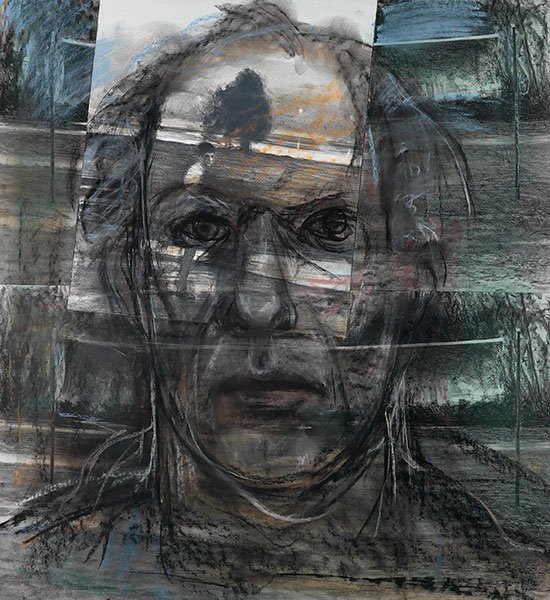
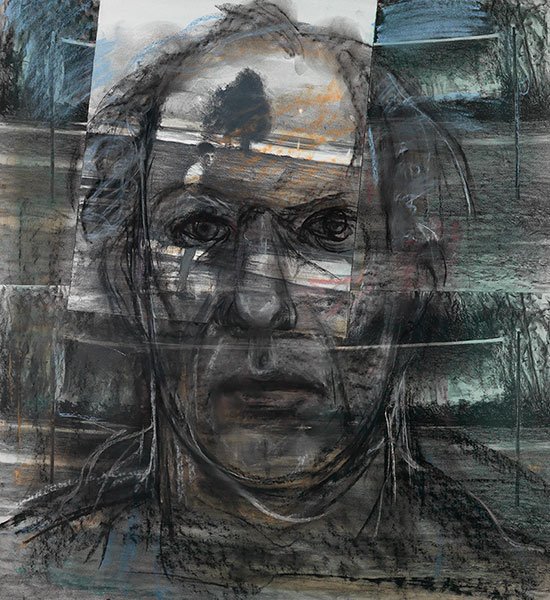
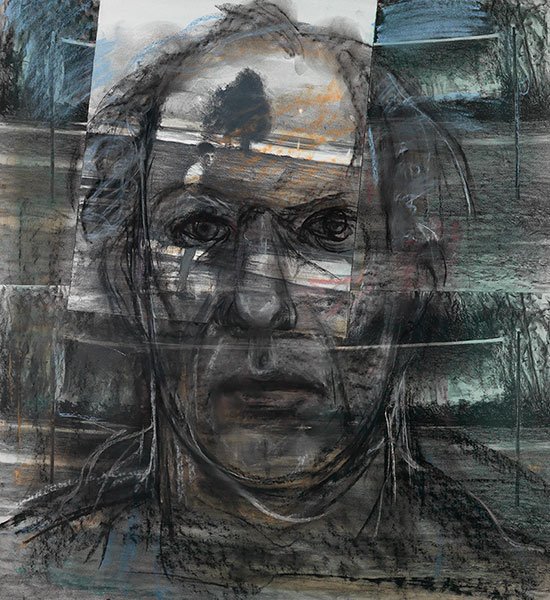
Michael Mazur "Self Portrait," 1986
May 25-December 31, 2017
In celebration of one of the most distinguished artists to have graduated from Amherst College, the Mead Art Museum has organized the exhibition Perspectives on Michael Mazur to honor his memory in what would have been his 60th reunion year. Michael Mazur (1935-2009), Class of 1957, was a talented painter and printmaker, as well as a dedicated teacher and arts advocate who held positions at esteemed institutions including the Rhode Island School of Design, Brandeis University, and Harvard University.
Throughout his 50-year career as an artist, he demonstrated an astounding stylistic range. Mazur worked in many media, especially printmaking, in which he mastered techniques including aquatint, lithography, and monotype. His artworks have been acquired by numerous museums including the Art Institute of Chicago, the Harvard Art Museums, the Philadelphia Museum of Art, the Whitney Museum of American Art, and the Yale University Art Gallery.
The Mead Art Museum holds an important collection of Mazur’s work, and this exhibition combines the Mead’s collection with generous alumni loans to illustrate the sweeping range of Mazur’s oeuvre. The show will include many works that have never been shown in public before, such as his senior thesis An Image of Salome, in addition to his vibrant pastels, large-scale gestural paintings, and well-known prints, such as Dante's Inferno.
Michael Mazur’s work is represented by Ryan Lee Gallery in New York and by Barbara Krakow in Boston.
Perspectives on Michael Mazur at the Mead Art Museum
Michael Mazur at Mead Art Museum
In celebration of one of the most distinguished artists to have graduated from Amherst College, the Mead Art Museum has organized the exhibition Perspectives on Michael Mazur to honor his memory in what would have been his 60th reunion year. Michael Mazur (1935-2009), Class of 1957, was a talented painter and printmaker, as well as a dedicated teacher and arts advocate who held positions at esteemed institutions including the Rhode Island School of Design, Brandeis University, and Harvard University.Throughout his 50-year career as an artist, he demonstrated an astounding stylistic range. Mazur worked in many media, especially printmaking, in which he mastered techniques including aquatint, lithography, and monotype. His artworks have been acquired by numerous museums including the Art Institute of Chicago, the Harvard Art Museums, the Philadelphia Museum of Art, the Whitney Museum of American Art, and the Yale University Art Gallery.The Mead Art Museum holds an important collection of Mazur’s work, and this exhibition combines the Mead’s collection with generous alumni loans to illustrate the sweeping range of Mazur’s oeuvre. The show will include many works that have never been shown in public before, such as his senior thesis An Image of Salome, in addition to his vibrant pastels, large-scale gestural paintings, and well-known prints, such as Dante's Inferno.
Opening Reception, Thursday, May 25 at 5 p.m. Mead Art Museum
Free & Open to the Public
For more information

News: Michael Mazur at Barbara Krakow Gallery

Michael Mazur: Drawings 1959 - 2009
May 2, 2015 - June 6, 2015
Barbara Krakow Gallery
10 Newbury StreetBoston, MA 02116
News: “Michael Mazur: The Inferno of Dante” at The Print Center
Michael Mazur: The Inferno of Dante
April 17 – July 11, 2015
The Print Center, Philadelphia, PA
The Print Center continues its Centennial year with Michael Mazur: The Inferno of Dante, which brings together over twenty etchings from the artist’s masterful portfolio of prints. Mazur’s work has been highlighted in over a dozen exhibitions at The Print Center, including a solo exhibition of his work in 1965.

Michael Mazur, Canto VII (Paolo and Francesca), 1999; Courtesy of Ryan/Lee Gallery, New York, NY
From the Archive: True Monotypes Exhibition at IPCNY
March 26, 2015 - May 30th, 2015
IPCNY 508 West 26th St, Room 5a, New York, NY 10001
Artists in the exhibition are Chuck Arnoldi, Romare Bearden, Cecily Brown, Gregory Crane, Paul DeRuvo, Valentina DuBasky, Joellyn Duesberry, Carroll Dunham, Mary Frank, Lawrence Gipe, Sue Heatley, Jasper Johns, Jane Kent, Joyce Kozloff, Maya Lin, Judith Linhares, Eddie Martinez, Michael Mazur, Kate McCrickard, James Nares, Anne Neely, John Newman, Elizabeth Peyton, Matt Phillips, Susan Rothenberg, Sara Sanders, Dana Schutz, Richard Segalman, Stuart Shils, Steven Sorman, David Storey, Philip Taaffe, Donald Traver, Mary Jo Vath, Chuck Webster, William Weege, Christopher Wool, and Lisa Yuskavage.
From the Archive: Performance of Michael Hersch's string quartet, "Images From a Closed Ward"
The seventh movement of Michael Hersch’s string quartet, “Images From a Closed Ward,” as played by the Kreutzer Quartet at St. Gabriel’s Church in London during the fall of 2014. This short film by Richard Anderson is made up of photographs of the ensemble interleaved with the haunting etchings of American artist Michael Mazur (1935-2009), which inspired the music.
I first came into contact with artist Michael Mazur's work in 2000, while I was living in Italy. An exhibition of Mazur's The Inferno of Dante, a series of forty-one etchings with accompanying texts of Dante translated into English by Robert Pinksy, was being shown at the American Academy in Rome. Viewing the collection of etchings was a deeply moving experience. Soon after meeting we became friends, and Mazur would often stop by the space I used to work in where I would then play through for him some of my own work at the piano. Almost a decade later, I began work on a string quartet; the catalyst for which was an encounter the previous year with two groups of etchings done by Mazur in the early 1960s: the Closed Ward and Locked Ward series. The images are devastating ones. Why I was attracted to them, how they resonated with and why they haunted me, are for reasons that remain personal. That said, the fact that visual art became something of an ignition point was a very new experience for me. As the summer of 2009 wound down, I had formulated the broad outlines of the work enough that I decided it would be a good time to re-connect with Mazur, with whom I had not spoken in some time. I was extremely excited at the prospect of seeing him again, and sharing the terrain of this new quartet. I felt that he would be surprised and pleased that something he had done had a hand in the shaping of this new work. The day before I planned to contact him, I read of his untimely death in a Sunday newspaper.
– Michael Hersch, October 2010
From the Archive: Some Follow-up Thoughts on Michael Mazur (1935–2009), by John Yau
Art critic, John Yau offers some follow-up thoughts on his recent and compelling essay at Hyperallergic about the late painter Michael Mazur.


Michael Mazur: Stoneham Zoo featured in New York Arts
Michael Miller writes about Michael Mazur's recent exhibition “Stoneham Zoom” at Ryan Lee Gallery.
“Michael Mazur: Stoneham Zoo (1976-1979) at the Ryan Lee Gallery, closing November 15, 2014,” New York Arts, an International Journal for the Arts, November 14, 2014.

Michael Mazur: Stoneham Zoo (1977-1979) October 16 – November 15, 2014
Ryan Lee Gallery
515 WEST 26TH STREET, NY 10001
A selection of Installation shots of the current exhibition at Ryan Lee Gallery.
RYAN LEE is pleased to announce Michael Mazur: Stoneham Zoo (1977-1979), a selection of paintings and monumental pastel portraits of caged primates. This is the first time these works have been exhibited in New York since the artist’s groundbreaking show at Robert Miller Gallery more than 30 years ago. In the late 1970s, during a strong realist movement in the art world, Mazur returned to the subject of captivity, a theme which recurred in several phases of his career, beginning with his renowned hospital series, Closed Ward (1962-63), which portrays the most afflicted residents in a psychiatric ward. Throughout is life, Mazur addressed the individual human condition as well as society’s role in exploitative policies and systems of confinement. The work demands of himself and viewers recognition of the abused and forgotten. The American Way Room (1968), a wall and floor installation in an empty storefront where viewers walked over images of victims of the Vietnam war, brough his anti-war position to public spaces. His monotype collaboration, with poet laureate Robert Pinsky, of Dante’s Inferno confronts states of relentless anguish.
In a 1993 interview with the Archives of American Art, Mazur said “I decided to do some work on the monkey cages at Stoneham Zoo, which were very depressed and reminded me of the mental hospital. It was a strange return to the hospital work via the world of animals.” His mastery of pastel is essential to the Stoneham Zoo pieces. The medium provided him with a way to combine elements of drawing and painting. Pastel’s directness of touch gives a vsiceral feeling of movement. The primates are on edge, yet in stasis. Tangible despair and the inhumane nature of zoos are conveyed in these portraits of the primates in their looming, barren cages. Light and shadow capture the dualities of passitivity and tension within the images. A psychological intensity is heightened by Mazur’s extreme color choices.

Michael Mazur (1935-2009) is internationally recognized for his paintings, drawings, and prints. He experimented with and moved fluidly between ideas and media. He was invited to represent the US in the 1970 Venice Biennale, but declined to participate in protest of the Vietnam War. He exhibited widely in 160 solo and group shows, and in 2000, the Museum of Fine Arts, Boston held a major traveling retrospective. His work is in several prominent collections, including the British Museum, UK; Castelvecchio Verona, IT; Cleveland Museum of Art, OH; de Cordova Museum, MA; Los Angeles County Museum of Art, CA; McNay Art Museum, TX; Metropolitan Museum of Art, NY; Museum of Modern Art, NY; Philadelphia Museum of Art, PA; Smithsonian American Art Museum, Washington, DC; Whitney Museum of American Art, NY; Yale University Art Gallery, CT; and Zimmerli Art Museum at Rutgers University, NJ.
The Human Image, Nagoya Japan
The Human Image is survey of work by European and American figural artists from 1945 to 2010, including a selection of Michael Mazur's work. The exhibition is located in Nagoya, Japan at the Nagoya/Boston Museum of Fine Art . The show is up from 20 September–30 November 2014.
Michael Mazur: Stoneham Zoo (1977-1979) October 16 – November 15, 2014
Ryan Lee Gallery
515 WEST 26TH STREET NY, NY 10001
TUESDAY-SATURDAY, 10AM – 6PM
RYAN LEE is pleased to announce Michael Mazur: Stoneham Zoo (1977-1979), a selection of paintings and monumental pastel portraits of caged primates. This is the first time these works have been exhibited in New York since the artist’s groundbreaking show at Robert Miller Gallery more than 30 years ago. In the late 1970s, during a strong realist movement in the art world, Mazur returned to the subject of captivity, a theme which recurred in several phases of his career, beginning with his renowned hospital series, Closed Ward (1962-63), which portrays the most afflicted residents in a psychiatric ward. Throughout his life, Mazur addressed the individual human condition as well as society’s role in exploitative policies and systems of confinement. The work demands of himself and viewers recognition of the abused and forgotten. The American Way Room (1968), a wall and floor installation in an empty storefront where viewers walked over images of victims of the Vietnam war, brought his anti-war position to public spaces. His monotype collaboration, with poet laureate Robert Pinsky, of Dante’s Inferno confronts states of relentless anguish. In a 1993 interview with the Archives of American Art, Mazur said “I decided to do some work on the monkey cages at Stoneham Zoo, which were very depressed and reminded me of the mental hospital. It was a strange return to the hospital work via the world of animals.” His mastery of pastel is essential to the Stoneham Zoo pieces. The medium provided him with a way to combine elements of drawing and painting. Pastel’s directness of touch gives a visceral feeling of movement. The primates are on edge, yet in stasis. Tangible despair and the inhumane nature of zoos are conveyed in these portraits of the primates in their looming, barren cages. Light and shadow capture the dualities of passivity and tension within the images. A psychological intensity is heightened by Mazur’s extreme color choices.
Images from a Closed Ward, composed for quartet by Michael Hersch
Michael Hersch on Michael Mazur
Blair String Quartet, March 7th, 2012, Carnegie Hall's Weill's Recital Hall, 8pm
"Images from a Closed Ward" is a 13-movement, 45-minute work that was inspired by etchings from the late visual artist Michael Mazur of mental institutions in the 1960s. The work incorporates expressive markings ranging from "longing, quiet, extreme grief" to "raging violently throughout." While Hersch has written for a broad range of instrumentation, "Images from a Closed Ward" is his first string quartet in 20 years. “The catalyst for 'Images from a Closed Ward' came from two groups of etchings I encountered by Michael Mazur, who was also a friend,” explains Hersch. “The images are devastating ones, and they had a profound impact on me. The fact that visual art became something of an ignition point for my work was a very new experience.” “This piece pushes the boundaries of a traditional quartet’s soundscapes,” said Wang. “The voice that you hear in this music is highly personal and original. We are extremely proud to work with Michael and to premiere this deeply moving quartet.” See/listen to excerpts of the work performed by FLUX Quartet below.
For more information visit www.michaelhersch.com.
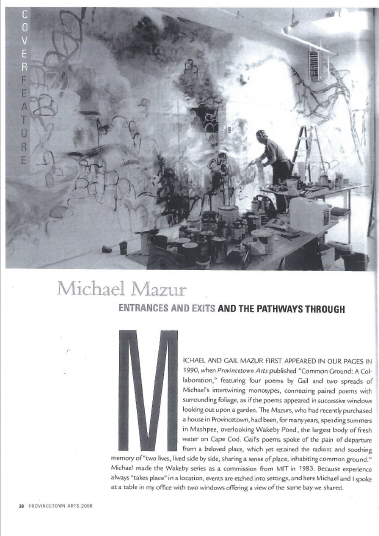
Michael Mazur: Entrances and Exits and The Pathways Through
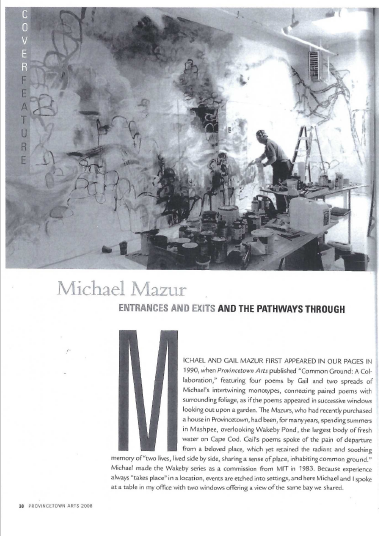
An interview by Christopher Busa
Excerpt:
Michael and Gail Mazur first appeared in our pages in 1990, when Provincetown Arts published “Common Ground: A Collaboration,” featuring four poems by Gail and two spreads of Michael’s intertwining monotypes, connecting paired poems with surrounding foliage, as if the poems appeared in successive windows looking out upon a garden. The Mazurs, who had recently purchased a house in Provincetown, had been, for many years, spending summers in Mashpee, overlooking Wakeby Pond, the largest body of fresh water on Cape Cod. Gail’s poems spoke of the pain of departure from a beloved place, which yet retained the radiant and soothing memory of “two lives, lived side by side, sharing a sense of place, inhabiting common ground.” Michael made the Wakeby series as a commission from MIT in 1983. Because experience always “takes place” in a location, events are etched into settings, and here Michael and I spoke at a table in my office with two windows offering a view of the same bay we shared.
And in an introduction to this issue, Michael Mazur wrote:
Studios are full of ghosts — ghosts of artists long gone, but not forgotten by relatives who hold on to their work spaces as memorials. When I visit them, I’m disconcerted by the sweet sorrow of their emptiness, their cleanliness and order. Yet the artist’s presence, nearly palpable, persists in the silent air. The studio is the laboratory, the workshop, the sanctuary and temple, the home and the retreat. It is the spiritual and physical core of the artist’s life. In 1964, Canadian pianist Glenn Gould gave up the concert stage and withdrew into his recording studio, where he invented a new way to present his interpretive performances. He described his recording studio as “womblike,” as a place “where time turns in upon itself,” where he could create art “with its own laws and its own liberties.”
Originally published in Provincetown Arts, volume 23 annual issue 2008-2009. Download a PDF version of the article.